Gems September Newsletter 2025
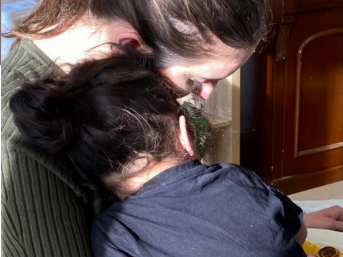
Little People, Big Emotions
Helping your child develop emotional intelligence, regulation and resilience by By Shawn Barron Head Teacher The Nest Kōwhai
Everything had been going so well, then suddenly it wasn’t. Your toddler had a plan, but you didn’t know – you offered them the green cup....... BIG mistake, HUGE.
They wanted the blue one. Now they are laying on the floor screaming and crying with a rage you didn’t know they could possess. Your ears are ringing, your heart is racing, ‘Come on, it’s just a cup!’
Parenting has changed since we were kids, and the list of things not to do in moments like this is long. But what CAN we do?
Emotional intelligence can set a child up for lifelong success and it’s never too early to start. It’s not just about surviving tantrums, its about building confidence, self-worth, empathy and resilience. Children require a lot of input from their caregivers on this journey, and many of us are still developing these skills for ourselves. At Gems, we’re here to help.
There are a few basics to live by before we get to trouble shooting. Infants, toddlers and young children all require predictable routines and environments, clear boundaries, physical regulation (food, water, rest, comfort), and lots of listening and talking to help them interpret what they feel.
Regulation – learning to ride the wave from sensation through response
Dysregulation – when a person has trouble recognising and responding to their emotions. For children this can manifest as:
- Crying, tantrums, meltdowns (particularly at the end of the day or after a stimulating
experience) - Impulse control
- Big energy bursts
- Silence or self-soothing (ie. thumb sucking, hair twirling) or
- Some unique thing that only you notice
Co-Regulation – when a caregiver supports the child to recognise and respond to their
emotions in healthy and appropriate ways
Self- Regulation – a skill that develops with age, support and practice
Resilience - emotional resilience is a person’s ability to navigate through difficult or
uncomfortable emotions, and to build a self- concept that they will be able to get through hard
things again in the future.
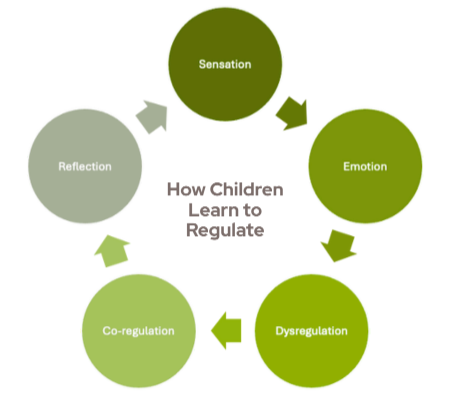
How to co-regulate with your child during BIG emotions:
- Move them to a safe place if needed
- Sit down nearby and offer calm presence “Okay, you’re upset. I’m here”
- Validate emotions while holding boundaries around safety and physical aggression. “You seem angry and sad. I won’t let you hit me.”
- Offer regulation tools AFTER their emotional response starts to de-escalate
- Reflect once calm, “Wow that was hard, you were angry. We did some slow breathing together and you felt better. Well done!”
Every day habits:
- Make things predictable by telling children what will happen
- Give space for the drive for autonomy by offering limited choices - “Would you like to put on your jacket or your vest?”
- Model calm – let your child see you breathe and slow down
- Talk about emotions and feelings
- Practise noticing body sensations – “Oh you ran outside without shoes! How do your feet feel? Cold?” or “Lets stop and ask our bodies what they need right now.”
- Practise noticing the emotions of others
- Practise waiting and coping with disappointment
- All emotions are okay, but not all behaviours are - “It’s okay to be mad, but I can’t let you do that.”
Infants and Pre-verbal Children A lot of these tips rely on verbal communication, but even children who can’t talk can learn emotional regulation. You can communicate calmness using your body, tone and face. Hold your child, breathe slowly, rock or sway gently, hum, and yes, you can still say all the same things you might say to a verbal child.
Everyday Tools:
- Comfort objects (snugglies, blankets) or behaviours (thumbsucking, hair twirling, chewing) can be helpful supports for a child to move toward self-regulation
- Quiet spaces
- Activities for calming: colouring, reading, ordering objects, swinging, spinning, climbing, lifting, yoga poses
- Breathing tools: blow out the candles, five finger breathing, blowing bubbles
- Going outside
- Grounding: what can you see? what can you hear?
Remember, ALL humans have emotions, not having them is NEVER the point. Helping children to build self-regulation and resilience doesn’t mean protecting them from every emotion, nor does it mean telling them to harden up. It means allowing them to experience the full range of human emotion with support, guidance, and tools. It means teaching them that they can move through their emotions, learn from their emotions, and use their emotions to connect with other people and themselves. Kia kaha, you’re doing great!
Ready to enrol
We look forward to having you join, start your enrolment online today

Read More
Lorem ipsum dolor sit amet, consectetur adipiscing elit.
Find a gems centre
for you and your child
Each of our three centres offers the same high standard of Gems care and curriculum, with thoughtful variations to suit your preferences and budget.